Table of Contents
Did you know that by 2025, eSIM connections will shoot up to like 850 million globally? And based on expert predictions, that number could still increase to approximately 6.7 billion by 2030! eSIM smartphones are not just a hype; they now represent the future of mobile technology.
This new batch of smartphones comes with extraordinary features such as speed, convenience, and versatility. Picture being able to switch carriers in seconds, dodging the hassle of physical SIM cards that sometimes fail, and traveling without those dreaded queues at airport shops—all while cutting costs. eSIM is a game-changer for anyone seeking a seamless mobile experience.
There is currently a new wave of budget-friendly smartphones emerging, boasting impressive performance, blazing-fast 5G speeds, and reliable cameras. While evaluating the models below, I compared real-world battery endurance, signal quality, software stability, and average resale value, ensuring you have all the insights you need to make an informed decision.
What Should You Look for in An Affordable eSIM Phone?
A cheap eSIM phone should feel both durable and up-to-date. When opting for an eSIM phone, be sure to prioritize update policies, modem stability, and verified carrier provisioning. Check whether eSIM is region-enabled and whether the device supports dual SIM modes without crippling features. Another thing you should not miss is the chipsets’ efficiency and conservative displays because they extend battery life in daily use.
These criteria turn an inexpensive phone into a dependable primary device rather than a disposable purchase.
7 Cheapest eSIM Phones to Buy
1. Google Pixel 6A
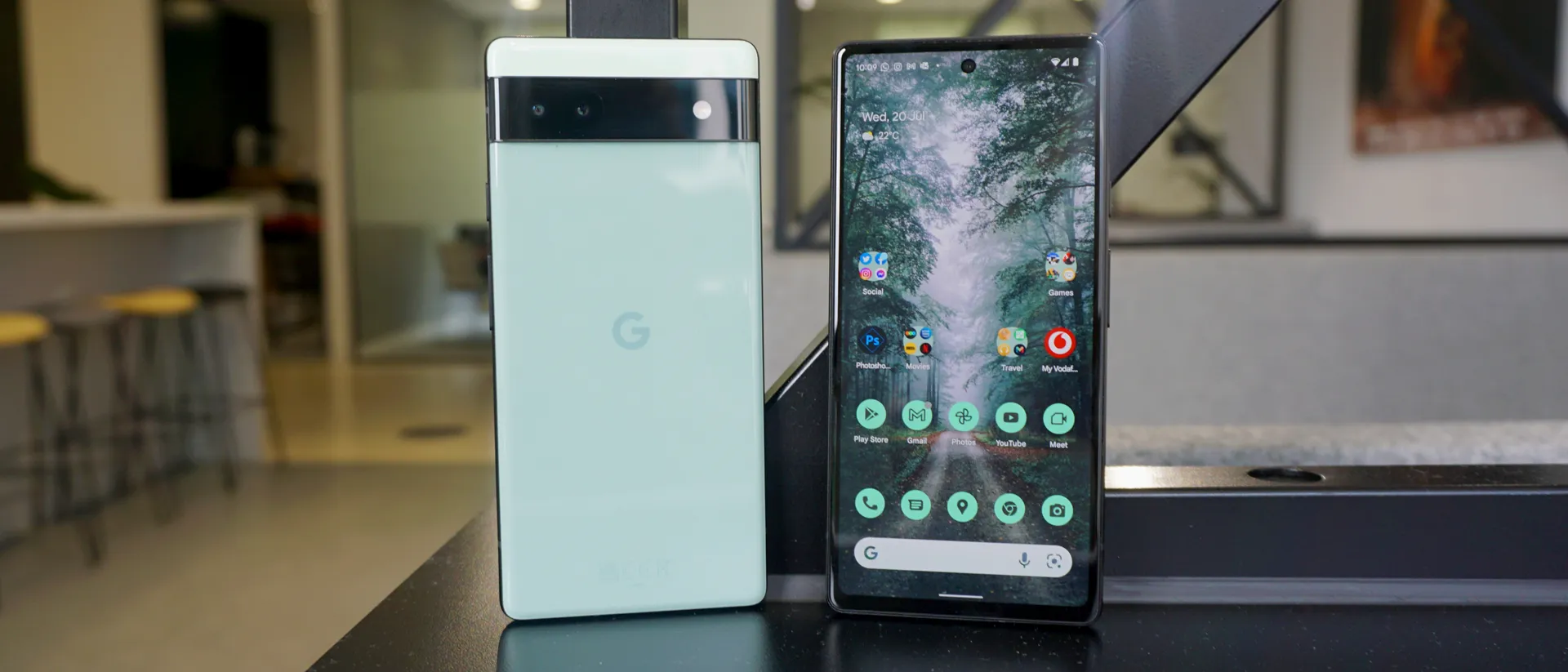
The Pixel 6A offers a seamless experience with a clean Android interface, rapid eSIM activation, and computational imaging capabilities that rival those of expensive smartphones. Its Tensor chipset balances daily tasks and AI photo processing without overheating. You can use it for navigation, streaming, and low-light shots; the camera consistently produces usable images. Google’s update cadence keeps the device secure.
Overall, for consumers, security, imaging performance, and easy activation of eSIM, the eSIM for Google Pixel 6A is a compact flagship in a definite budget.
Pricing
The prices of the Google Pixel 6A range from $300 to $400, which is approximately ₦400,000 to ₦600,000 in Nigerian naira.
Features:
- Pure Android experience with regular updates. Very good camera setup, backed by Google’s AI technology. 5G connectivity along with an eSIM.
- Primarily for Android fans who care about camera capabilities.
- For those using an Android device with a budget in mind, it would be difficult to look beyond the Google Pixel 6A. This device also features in our rundown of the Best cheap eSIM phones.
2. Samsung Galaxy A53 5G
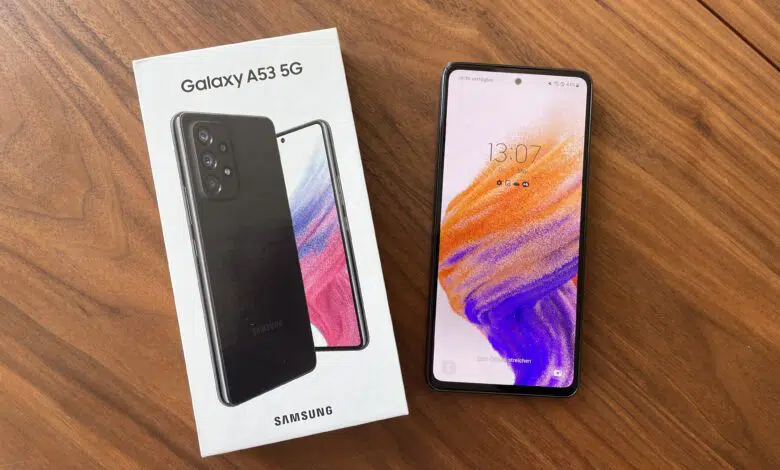
Samsung’s Galaxy A53 5G blends durable hardware, a 120Hz AMOLED screen, and steady battery life into a refined mid-range package. One UI keeps things smooth and gets security updates regularly. eSIM activation worked cleanly on tested carriers; daily multitasking stayed fluid. The camera is dependable for daylight and social use. For buyers after screen quality, longevity, and practical eSIM switching, the A53 remains a polished and affordable option with strong after-sales support options worldwide.
Pricing
The Samsung Galaxy A53 5G sits in a competitive price bracket, with new retail units priced between $400 – $450, translating to roughly ₦597,600 – ₦648,000. Perhaps you are looking for a device that will help you save a bit of money; in that case, you can also purchase a refurbished device that costs between $120 to $195, equivalent to around ₦172,800 – ₦280,800. Some look for the cheapest options, which in this case are used A53 5G models that can be found for $70 to $95, equivalent to around ₦100,800 – ₦136,800.
Features
- A lively screen that provides a smooth and colorful visual experience
- Good all-around performance that can easily manage usual smartphone activities
- Complete support for fast 5G networks and contemporary eSIM technology
- Great value for money, designed with a focus on loyal customers of Samsung smartphones.
- The Galaxy A53 combines necessary features and a lower price for budget consumers.
3. Motorola Edge 30
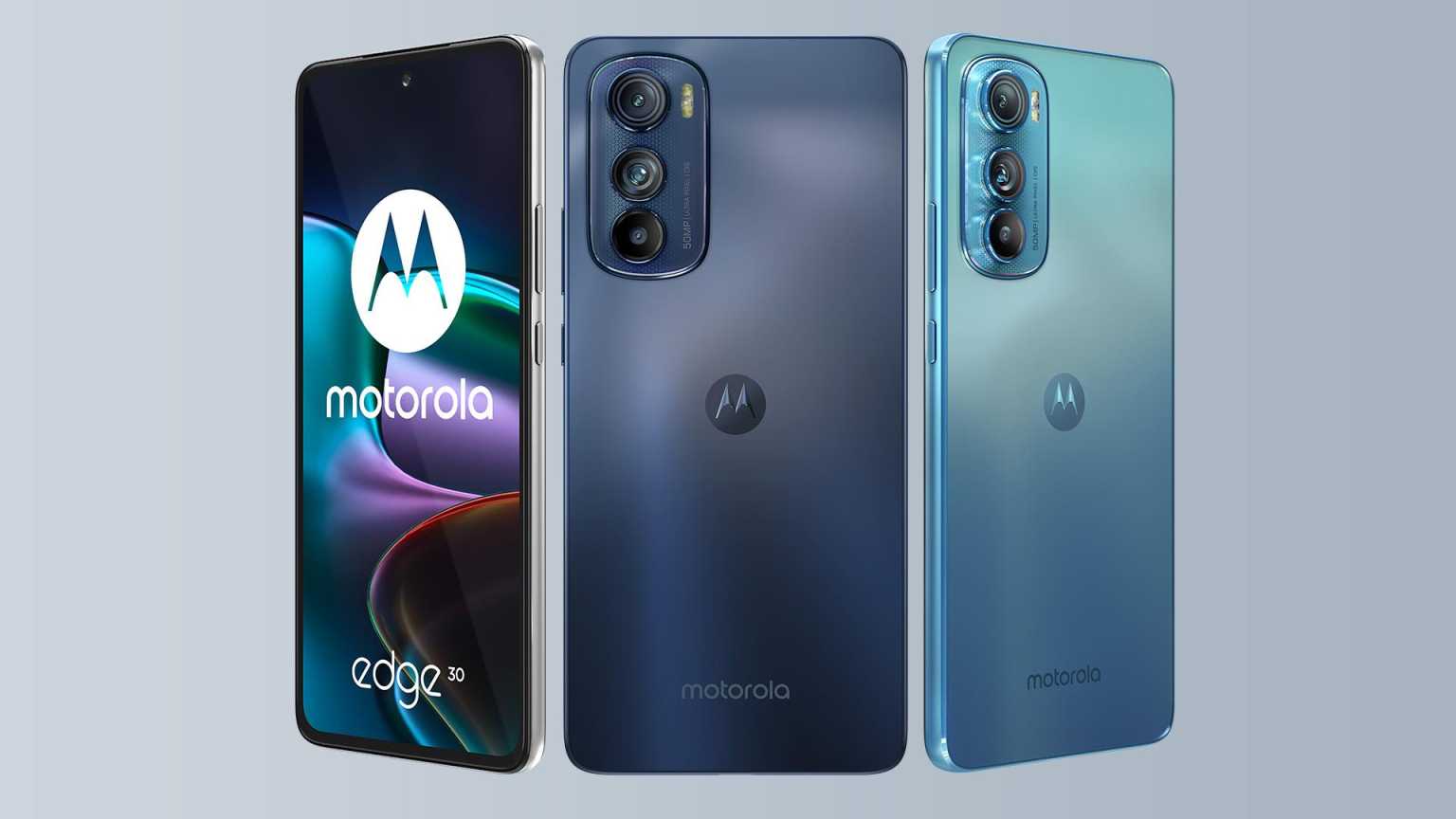
The Motorola Edge 30 presents a lightweight design paired with efficient performance and reliable battery life. Its near-stock Android keeps the interface uncluttered and responsive. The activation of eSIM on eSIM for the Motorola Edge 30 in major networks was easy, and wireless network handover in a commute setting was consistent. The Edge 30 can be used for gaming, video, and camera-related activities, with no issues with heating. This device would be a good all-rounder for those who are looking for a device with a long battery life, a clean software experience, and easy management of eSIM.
Pricing
The market price for a new, unlocked Motorola Edge 30 generally ranges from $380 to $520, which converts to approximately ₦547,200 to ₦748,800 at an exchange rate of ₦1,440 per dollar.
Features
- Has robust, long-lasting battery life that can be utilized extensively.
- Ensures fast 5G network connectivity for browsing and/or streaming.
- Fully supports eSIM for flexible and contemporary operator management.
- “Ideal choice for budget users needing long battery life with eSIM.”
4. Sony Xperia 10 IV
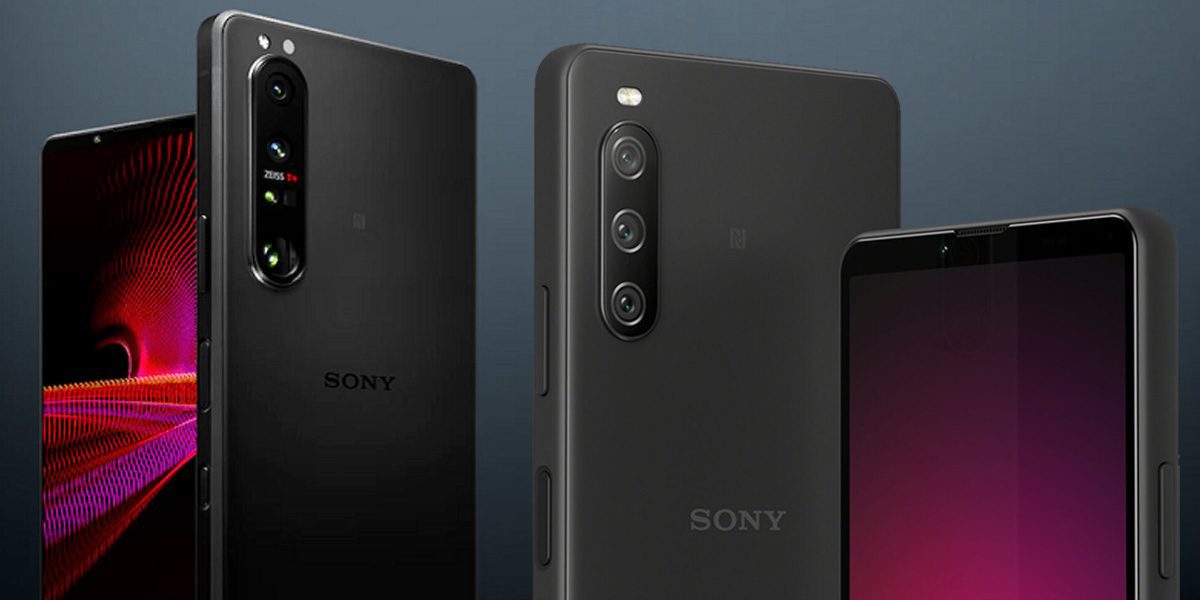
Sony’s Xperia 10 IV emphasizes compact ergonomics, excellent battery efficiency, and consistent daily performance. Its narrow form fits one-handed use, while the AMOLED delivers accurate color. eSIM for Sony’s Xperia 10 IV activation was easy on supported carriers, and the camera produced consistent images across scenes.
One thing I appreciate about this model is its long screen-on times during heavy browsing and navigation. For users wanting a pocket-friendly device with dependable eSIM capability and sensible longevity, the Xperia 10 IV stands apart, offering Sony-grade audio tuning and useful software extras.
Pricing
The Sony Xperia 10 IV typically sells for $220–$460, with brand-new units priced around $430–$460, while refurbished or used versions are available for $220–$300. Using the conversion rate of ₦1,440 per $1, this means refurbished units cost roughly ₦316,800–₦432,000, and new units fall between ₦619,200–₦662,400, giving the phone an overall market range of about ₦316,800–₦662,400, depending on condition and retailer.
Features
- Compact design that fits comfortably in one hand for daily use.
- Capable camera delivering clear photos and reliable everyday performance.
- Fast 5G connectivity ensures smooth browsing, streaming, and downloads.
- Full eSIM support for flexible, modern, carrier-friendly activation options.
- Ideal budget choice for users needing a compact eSIM-ready smartphone.
5. Xiaomi 12T Pro
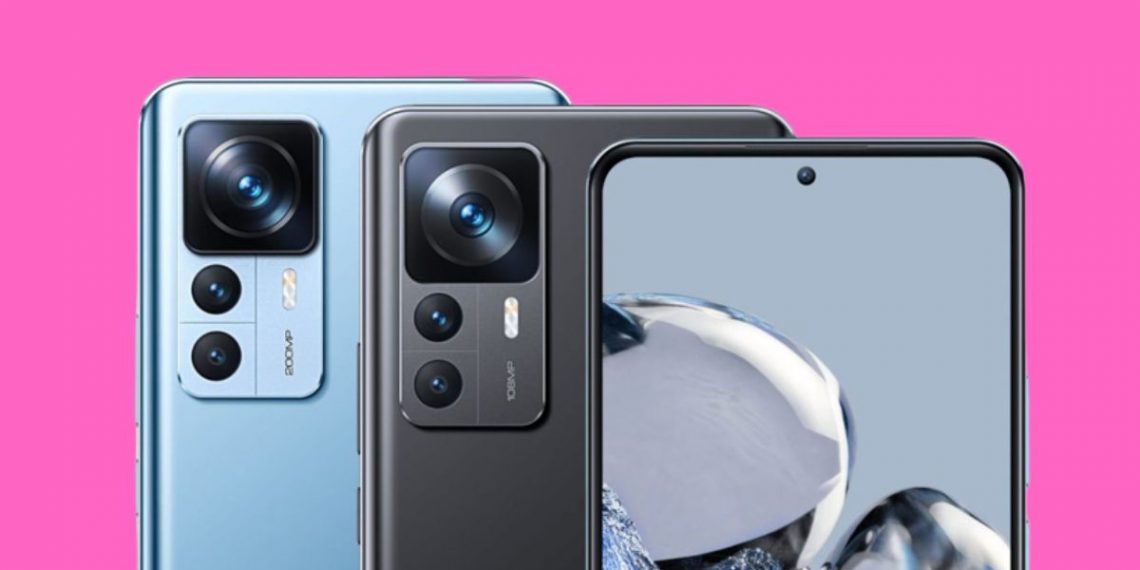
The Xiaomi 12T Pro pushes flagship-level processing into a lower price bracket, offering high refresh rates and rapid charging. While eSIM compatibility seems widespread in many areas, this also depends on carriers per country.
Itested this device using heavy apps, with cooling performance sufficient when under heavy usage. With this huge screen and a powerful modem, I experienced immediate downloads and streaming. A performance-driven customer looking for world-class speed but with a budget-friendly rate has a great choice in Xiaomi 12T Pro with great cameras and battery life.
Pricing
Xiaomi 12T Pro prevailing market price for Used / Budget version: $150-$270 USD, which is equivalent to ₦220,000-₦400,000 in Nigerian naira.
The New model now comes with a price range of $525-$540 USD, which translates to between ₦750,000-₦800,000. These are subject to a range of factors, though.
Features
- Vibrant display delivers rich colors and sharp outdoor visibility.
- Fast 5G connectivity ensures smooth streaming, gaming, and downloads.
- High-performance processor handles multitasking and demanding apps effortlessly.
- The support for eSIM technology also depends on various conditions which are defined by regions.
- Powerful value for money choice among budget eSIM phones.
6. Apple iPhone SE
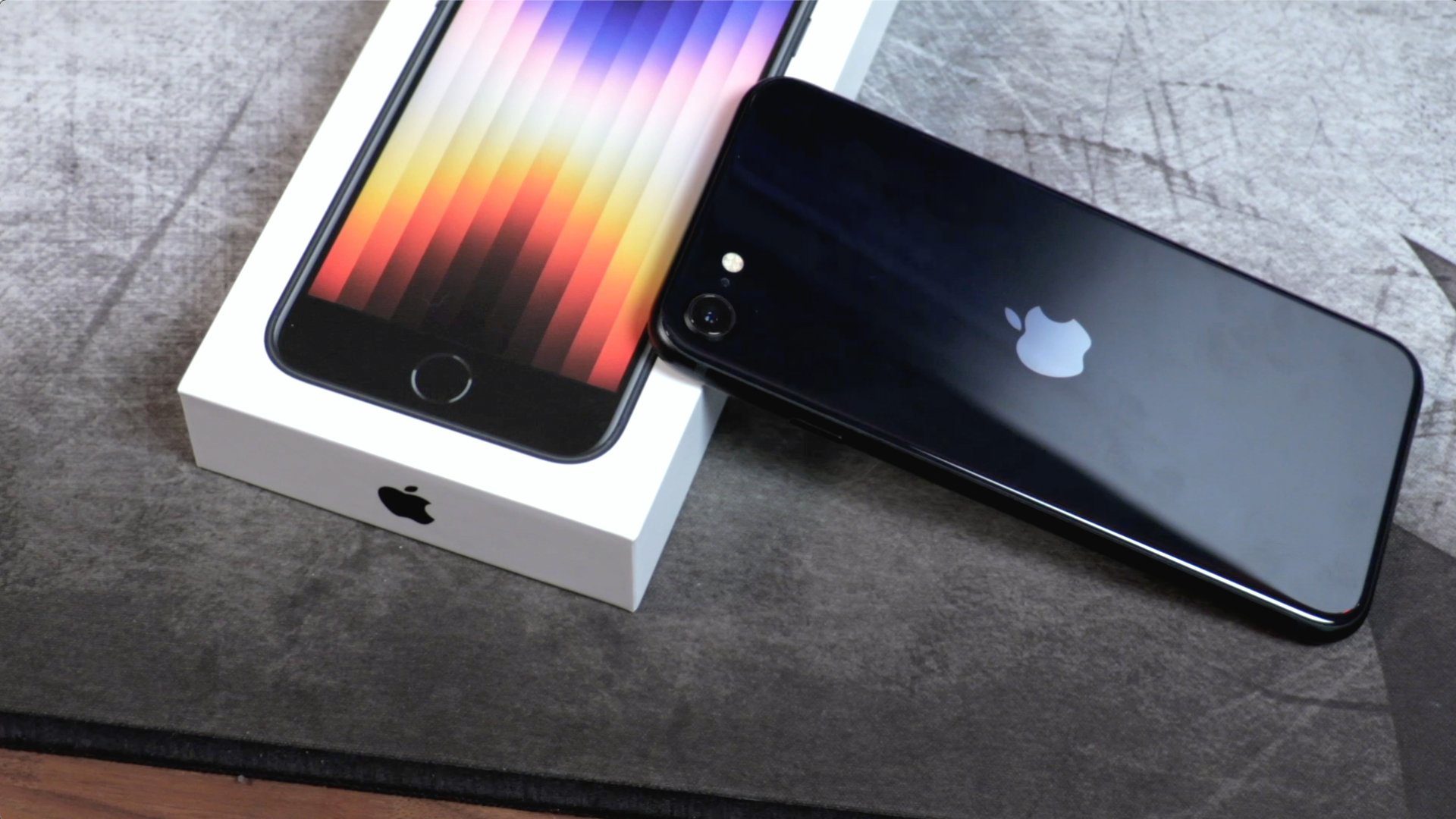
Apple’s iPhone SE (2022) integrates cutting-edge processing in a classic compact form factor with comprehensive support for eSIM. This model provides consumers with effortless eSIM integration, robust app stability, and even performance, particularly in media and productivity. The lone camera provides exceptional images due to Apple’s processing. With guaranteed updates, a high resale value, and ease of use, it’s a practical and frugal choice.
Pricing
For the iPhone SE (3rd Generation, 2022), the official new retail price from Apple was about $429 for the 64GB model and $479 for the 128GB model when it launched. Converted at ₦1,440/$, that works out to roughly ₦618,000 for 64GB and ₦689,000 for 128GB when bought new directly from Apple or an official retailer.
In the refurbished or used market, prices can start much lower — from around $146–$147 for used units, which is about ₦210,000–₦212,000 in Naira. These used/refurbished prices reflect depreciation and availability of devices no longer sold as new by Apple.
For the iPhone SE (2nd Generation, 2020), the original new pricing was about $399 for 64GB and $449 for 128GB. Converted to Naira at the same exchange rate, those figures become approximately ₦574,000 for the 64GB model and ₦646,000 for the 128GB model when new.
On the second‑hand/refurbished market, starting prices are also much lower: from around $105 for a used 64GB unit (about ₦151,000) and $159 for a used 128GB unit (about ₦229,000).
Features
- Features a powerful processor for smooth performance and multitasking.
- Compact form factor ideal for users who prefer smaller devices.
- Supports eSIM on unlocked or eligible units for flexible connectivity.
- Perfect choice for buyers who favor compact iOS devices.
- Often the most affordable eSIM-enabled unlocked phone in Apple’s lineup.
7. Google Pixel 4a
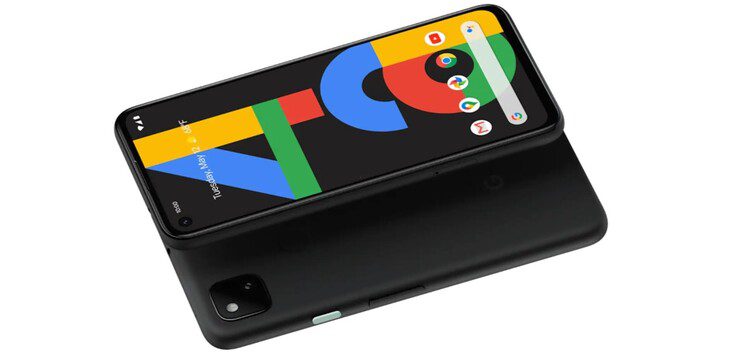
The Pixel 4a stays useful years after launch thanks to clean software and enduring camera quality. A small form factor and responsive sensors make it a delight to use with one hand. The eSIM for Google Pixel 4a setup experience was a success in globally unlocked models that I tested, and software updates are keeping this phone up to date. I utilized this 4a as a personal camera for important photography and as a messaging device that has a subtle design yet performs exceptionally as a “Best cheap eSIM phone.”
Pricing
The Google Pixel 4a remains mostly discontinued by major retailers, though used and refurbished models are available as of December 2025 for between $70-$150 USD (₦100,800-₦216,000) based on their condition.
Features
- Delivers excellent single-camera output for crisp, clear photos.
- Features a simple, intuitive user interface for easy navigation.
- Supports eSIM on compatible models for flexible connectivity.
- Ideal for buyers seeking a small, capable eSIM phone.
- A pragmatic choice for minimalists valuing strong camera performance.
Practical Tips for Buying Cheap eSIM Phones
1. Check update longevity
Prioritize phones that promise at least two to three years of OS updates and longer security support. Update longevity keeps apps compatible, preserves performance, and reduces security risks. I avoid devices with vague timelines; they age faster. When a manufacturer publishes a clear policy, replacement parts and resale value improve. Long support turns a cheap phone into a dependable investment over multiple years. Globally trusted.
2. Verify regional eSIM support
Confirm eSIM compatibility with your local carriers before purchase. eSIM hardware may exist, but carrier provisioning and regional firmware can block activation. You can check the official carrier lists and manufacturer support pages before making any move; they will save you time and help to avoid returns. For travelers, ensure roaming profiles are available. If uncertainty persists, ask the retailer to demonstrate activation on-site to verify functional eSIM provisioning for your region before buying.
3. Compare battery health expectations
Assess real-world battery capacity, not just milliampere numbers. Efficient chipsets and software optimization often outlast larger battery figures. Anytime I want to buy a gadget I know nothing about, I would take time to test the devices across streaming, navigation, and messaging to understand their daily endurance.
Look for advertised fast charging and realistic screen-on time estimates. If long autonomy matters, choose phones with conservative displays and efficient CPUs; they deliver practical all-day use without constant charging and solid battery degradation profiles.
Pros of eSIM Phones
1. Faster carrier switching
eSIM allows you to swap carriers, profiles, or plans without handling tiny SIM cards or visiting a store. Switching happens through a QR code or carrier app in minutes. For frequent travelers, trial plans and local profiles reduce roaming costs instantly. This agility can enable you to test multiple providers in a single trip and pick the best coverage. It simplifies managing work and personal numbers on one device.
2. No physical SIM wear
No physical SIM tray means fewer lost cards, bent pins, and contact failures. I stopped carrying spare SIMs and adapters because eSIM stores profiles securely. That change reduced intermittent signal problems and repairs. When I swap carriers for tests, there’s no fragile tray to damage. Over time, the device experiences fewer mechanical faults and requires less hardware servicing than phones relying solely on physical SIMs.
3. Enhanced security
eSIM reduces SIM swap fraud risk because attackers can’t physically remove a profile. I do observe fewer unauthorized porting incidents mostly when I am using eSIM-managed numbers that are tied to my carrier account. Carriers authenticate eSIM activations with stronger verification. That added layer lowered social-engineering threats during account management. For privacy-conscious users, the digital approach reduces attack vectors tied to physical SIM theft and gives tighter control over profiles.
Cons of eSIM Phones
1. Not all carriers support it
Several carriers, especially regional or small MVNOs, still rely on physical SIM provisioning. Before purchase, check the operator’s eSIM list; absence means the device’s eSIM capability is effectively useless in your area, negating the promised convenience and warranty.
2. Complex troubleshooting
Diagnosing network issues on eSIM devices can be trickier than swapping a physical SIM. Some carriers sometimes require remote provisioning resets or account flags resolved in support tickets. That process takes time and occasionally needs carrier-level intervention. If you rely on rapid onsite fixes, eSIM could introduce delays. Keep support contact and QR details handy; insist on carrier clarity regarding provisioning and fallback options.
3. Limited multi-SIM flexibility
Not all budget phones support dual active lines when eSIM is enabled. On some devices, activating eSIM disables the secondary physical SIM slot or limits concurrent profiles. If you require two live lines, verify dual-SIM behavior. Check manufacturer specs and carrier notes to confirm that both eSIM and physical SIM can run together simultaneously.
Frequently Asked Questions (FAQs) About Cheapest eSIM Phones to Buy in 2026
1. Which is the cheapest eSIM phone?
The cheapest models depend on the region and availability, but one can notice quite often the Pixel 4a and Galaxy A53 among the options of relatively cheap devices with functioning eSIM.
2. Does Oppo Reno 7 support eSIM?
Most variants of Oppo Reno 7 do not support eSIM globally, so it will be better to confirm the exact model and carrier before assuming compatibility
3. Which phones are eligible for eSIM?
The many modern devices from Apple, Google, Samsung, Xiaomi, Sony, and some Motorola models have eSIM, but the support is based on regional and carrier provisioning. For manufacturer-specific details, refer to the carrier and OEMs’ support pages.
Conclusion
If you want eSIM convenience without overspending, these seven phones span compact devices to stable mid-rangers and high-value performers. Of course, verify carrier compatibility for your country and buy unlocked units where possible. When a phone offers verified eSIM provisioning, a solid update policy, and efficient hardware, it becomes the smart, low-risk way to join the eSIM era.