Table of Contents
A Bitcoin wallet on your iPhone is really a key manager. The coins sit on the blockchain, and the app holds the keys that prove they are yours.
Eight of the ten below put those keys in your hands alone. The two that do not are flagged, because the difference decides what happens when something goes wrong.
1. Blue Wallet
Bitcoin-only, which makes it one of the few apps here actually built for the job. It handles ordinary on-chain transactions alongside Lightning, the faster and cheaper route for small payments.
Open source, and the choice of people who hold Bitcoin rather than trade it.
2. Muun
The simplest of the Bitcoin-focused apps to get started with. It manages the on-chain and Lightning distinction behind the scenes, removing the thing that most often confuses newcomers.
A good first wallet if you want to hold your own keys without learning the mechanics first.
3. Zengo
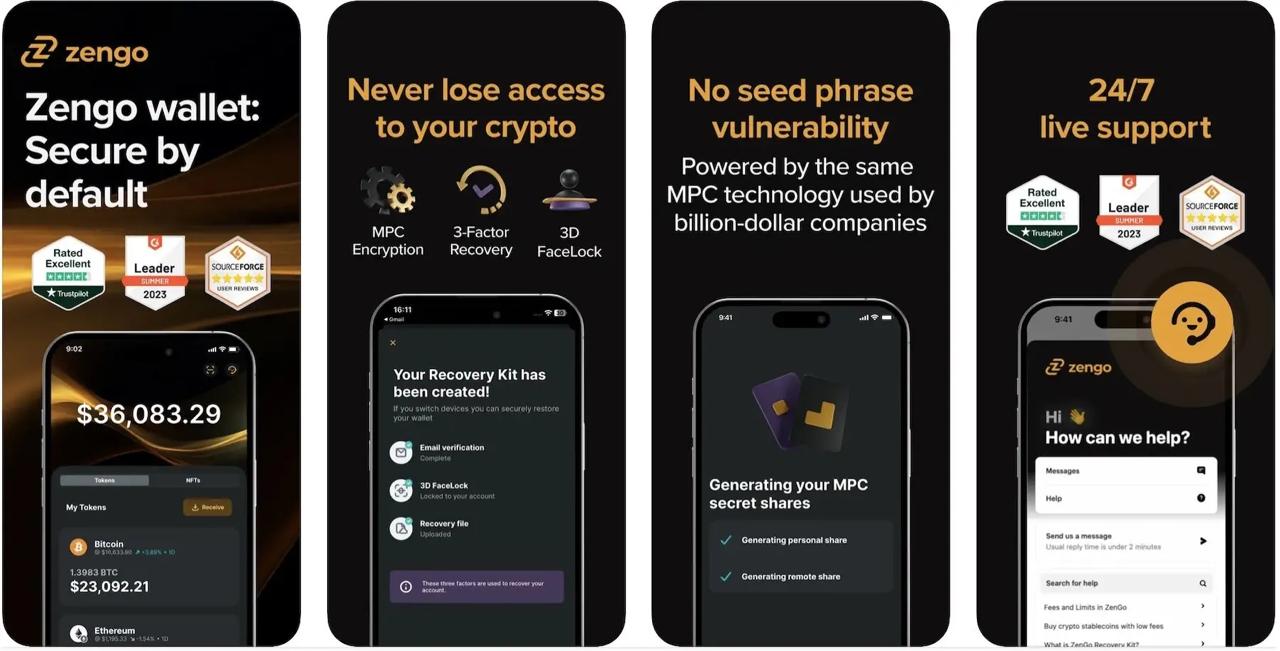
Has no seed phrase, which is unusual. Zengo splits your key between your device and its servers using multi-party computation, so there is no twelve-word phrase to write down or lose. Recovery runs on a face scan and a cloud backup instead.
Covers Bitcoin, Ethereum, Dogecoin and others, with buying and swapping built in. Paid tiers add theft protection.
The trade-off is genuine: nothing to steal, but you depend on Zengo’s infrastructure to get back in.
4. Exodus
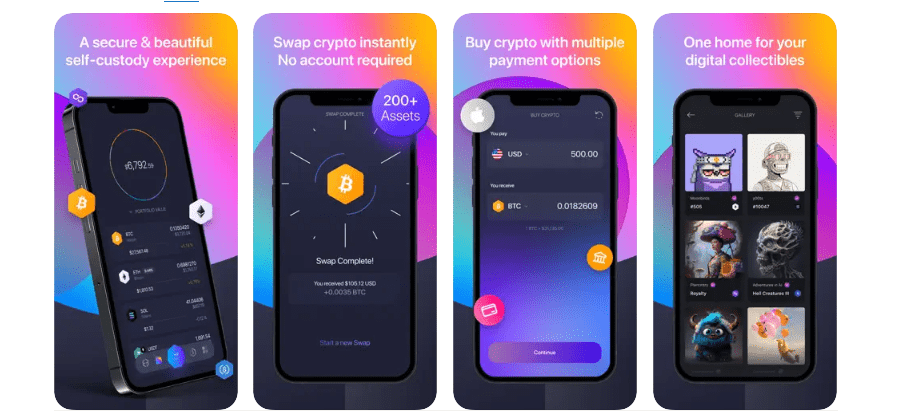
The easiest to look at, with Face ID unlock and swapping between assets built in. It also pairs with a Trezor hardware wallet if you later want your keys off the phone.
The mobile app covers fewer assets than the desktop version, which catches people out.
5. Trust Wallet
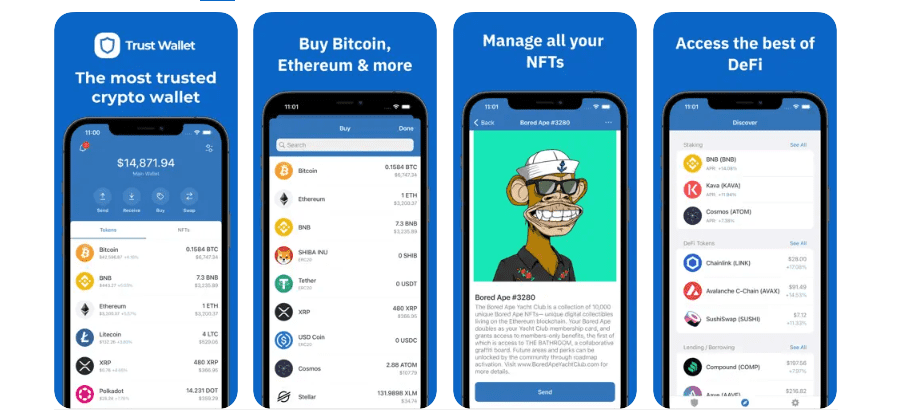
Handles a very wide range of assets across dozens of chains and doubles as a browser for decentralised apps. Built originally by Binance, now independent.
Practical if you hold more than Bitcoin, unfocused if you do not.
6. Coinbase Wallet
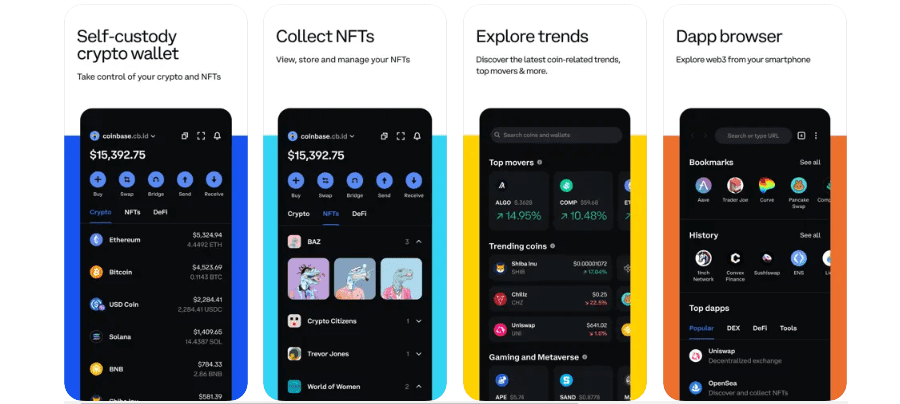
Worth being precise about, because it is widely misunderstood. You hold the private keys here. That is the opposite of a Coinbase exchange account, where Coinbase manages the keys for you.
No Coinbase account is needed to use it. Lose the recovery phrase and no support line can restore access.
7. Edge
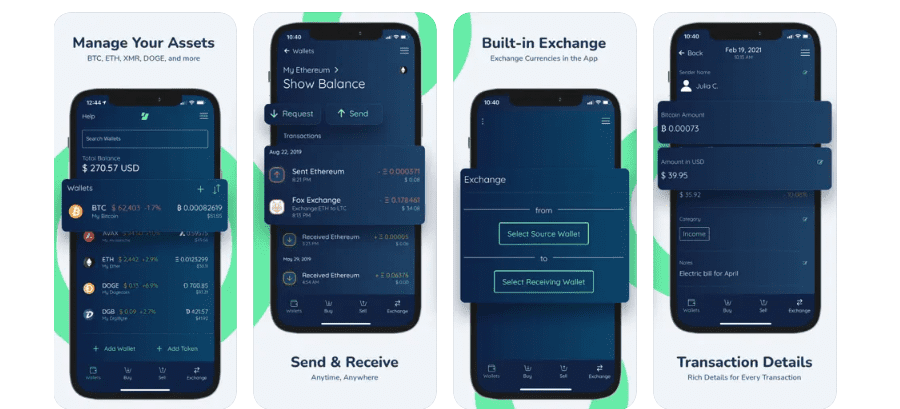
Does not ask for an email address, which makes onboarding unusually light. Covers Bitcoin and around a dozen other assets, with gift card purchases inside the app.
Suits you if privacy matters more than breadth.
8. Guarda
Includes an exchange and card purchases, with keys staying on your device rather than with the company.
In-app buying costs more than purchasing elsewhere and transferring in.
9. Ledger, paired with Ledger Live
Not a phone wallet. The keys live on a physical device and never touch the iPhone, which becomes a screen rather than a vault.
This is the answer when the amount is large enough that a phone makes you uneasy. It costs money and adds a step to every transaction, which is the point.
10. Crypto.com
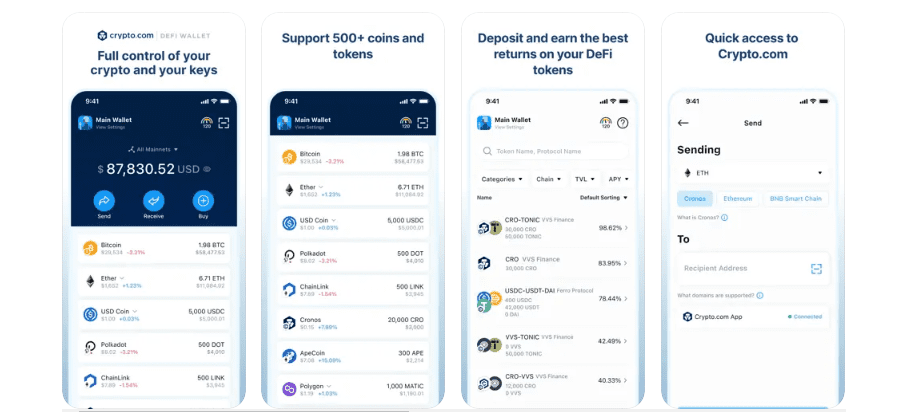
The exception on this list. Your coins sit with the company, not with you. That buys you account recovery if you forget a password, and it means trusting them to remain solvent.
Reasonable for small balances you are actively trading. Not where savings belong.
Keeping the keys safe
Nobody can freeze your funds, and nobody can help you if the recovery phrase is gone. That second part is not a formality, since losing wallet access is usually permanent.
Write the phrase on paper. Not a screenshot, not a notes app, not a password manager syncing to the cloud. Anything touching the internet can be reached.
Which one to pick
Holding only Bitcoin, take Blue Wallet or Muun. Holding several assets, Exodus or Trust Wallet. Worried about seed phrases, Zengo removes them. Holding a serious amount, Ledger and keep the keys off the phone entirely.
When you want naira instead, the published rate shows what your coins convert to before you commit.
Last updated on November 16, 2026