
Table of Contents
Check the same gift card twice in one week, and you are likely to see two different numbers. This is not because anyone is cheating you, but because the rate was never fixed to begin with. It’s a live number, recalculated constantly by forces you can’t see from the seller’s side: currency swings, demand spikes, and more.
That’s why the rate you checked on Monday can drop by Wednesday, and why two sellers with the “same” card can get different payouts. None of it is arbitrary, and once you understand the mechanics, you can time your sales instead of being caught by them.
This guide breaks down the six factors that move gift card rates daily, how to check the current rate before selling, and how to complete a transaction on Prestmit.
Factors That Make Gift Card Rates Change Daily

1. Dollar-to-Naira Exchange Rate Movements
This is the single biggest driver of gift card rates in Nigeria. Most gift cards are dollar-denominated, so their Naira value rises and falls with the exchange rate.
If the dollar appreciates against the naira, a $100 Amazon gift card that fetched ₦150,000 last month could fetch ₦165,000 today – same card, more Naira, because each dollar is now worth more. If the dollar depreciates instead, that same card would fetch less, say ₦140,000, because each dollar buys fewer Naira.
The effect isn’t always instant or one-to-one, because gift card trading platforms also price in their own dollar demand. But over any given week, the direction of the official exchange rate published by the Central Bank of Nigeria and the parallel market sets the ceiling and floor for gift card rates.
2. Supply and Demand for Each Gift Card Type
Every gift card brand has its own small market, supply, buyers, and rate that has nothing to do with what other brands are doing.
When a lot of sellers offload Amazon gift cards at once – say, right after a holiday shopping season abroad – supply goes up faster than demand, and the Amazon gift card rate drops. When buyers want a specific gift card, and few sellers have it, the rate for that gift card goes up instead. That’s why different gift card brands’ market moves.
A Steam gift card can go up on the same day an Amazon gift card rate goes down – two markets, two stories, no connection between them.
3. Gift Card Type, Brand, and Region
Before daily market movement even enters the picture, three things about the gift card itself set its base rate: gift card type, brand, and region.
Start with the gift card type. A physical gift card usually rates higher than an e-code, and the reason comes down to trust. A physical gift card is easier to verify and harder to reuse or double-spend, so buyers pay more for that certainty. An e-code, by contrast, is just a string of numbers that could, in theory, have already been used elsewhere, so it carries more risk and rates lower.
Brand matters just as much. Gift cards from high-demand names like Apple/iTunes, Amazon, and Steam hold stronger rates because more buyers want them. There is a deep, steady market ready to absorb them. A gift card from a niche or lesser-known brand doesn’t have that same pool of buyers waiting, so its rate sits lower even if the card’s face value is identical.
Region rounds it out. A US-issued gift card generally tops the market, with UK and Canadian gift cards close behind. Because demand for US gift cards runs deepest, more buyers want them, more platforms accept them, and more use cases exist for them.
A gift card issued in a smaller or less-demanded region simply doesn’t pull the same buyer interest, and its rate reflects that.
Our guide on why some gift cards have higher rates than others breaks these differences down brand by brand.
4. Fraud Risk and Gift Card Verification Costs
Every gift card a platform receives must be verified before payment, and that verification isn’t free. It takes systems, time, and sometimes manual review to confirm a gift card is genuine and unused before any money moves – which is exactly why an invalid or already-used gift card gets rejected rather than paid for.
When fraud attempts rise for a particular gift card brand or region, the cost of that screening rises too – more cards need closer checks, more flags need manual review. Platforms adjust rates on those gift cards to offset the heavier verification load.
This is also why rates can drop suddenly for one gift card brand while everything else holds steady – a wave of bad gift cards has hit the market, and pricing adjusts to protect against it.
5. Seasonal and Holiday Demand Cycles
Gift card volumes often follow the calendar, because gifting does. Around Christmas, Thanksgiving, and other special occasions abroad, loved ones show appreciation the easy way – a gift card, wrapped up with good intentions. But not everyone who receives a gift card actually wants to use it.
Maybe it’s not their favourite brand, maybe they’d just rather have cash in hand – so in the weeks right after these holidays, a lot of people start cashing out cards they have no plans to redeem.
All those sellers showing up at once would mean more cards than buyers can absorb, and rates dip. Once the holiday rush fades and fewer gift cards are hitting the market, things even out again and rates climb back up.
Buyer demand cycles matter too. Gaming gift card rates often firm up around major game releases and sales events, while retail card demand rises before shopping seasons.
If timing matters to your income, these cycles are the closest thing to a predictable pattern – and they pair well with knowing the best gift cards to buy in the USA and sell in Nigeria.
6. Global Platform and Policy Changes
Decisions made far outside Nigeria can reset rates overnight. When issuers like Apple or Amazon tighten redemption rules, restrict regions, or change card formats, the resale value of affected cards shifts immediately. Regulatory changes around foreign exchange in Nigeria can have the same effect on the entire market.
These shocks are rare but sharp, and they’re the main reason no platform can guarantee tomorrow’s rate.
Best Platform to Sell Your Gift Card – Prestmit
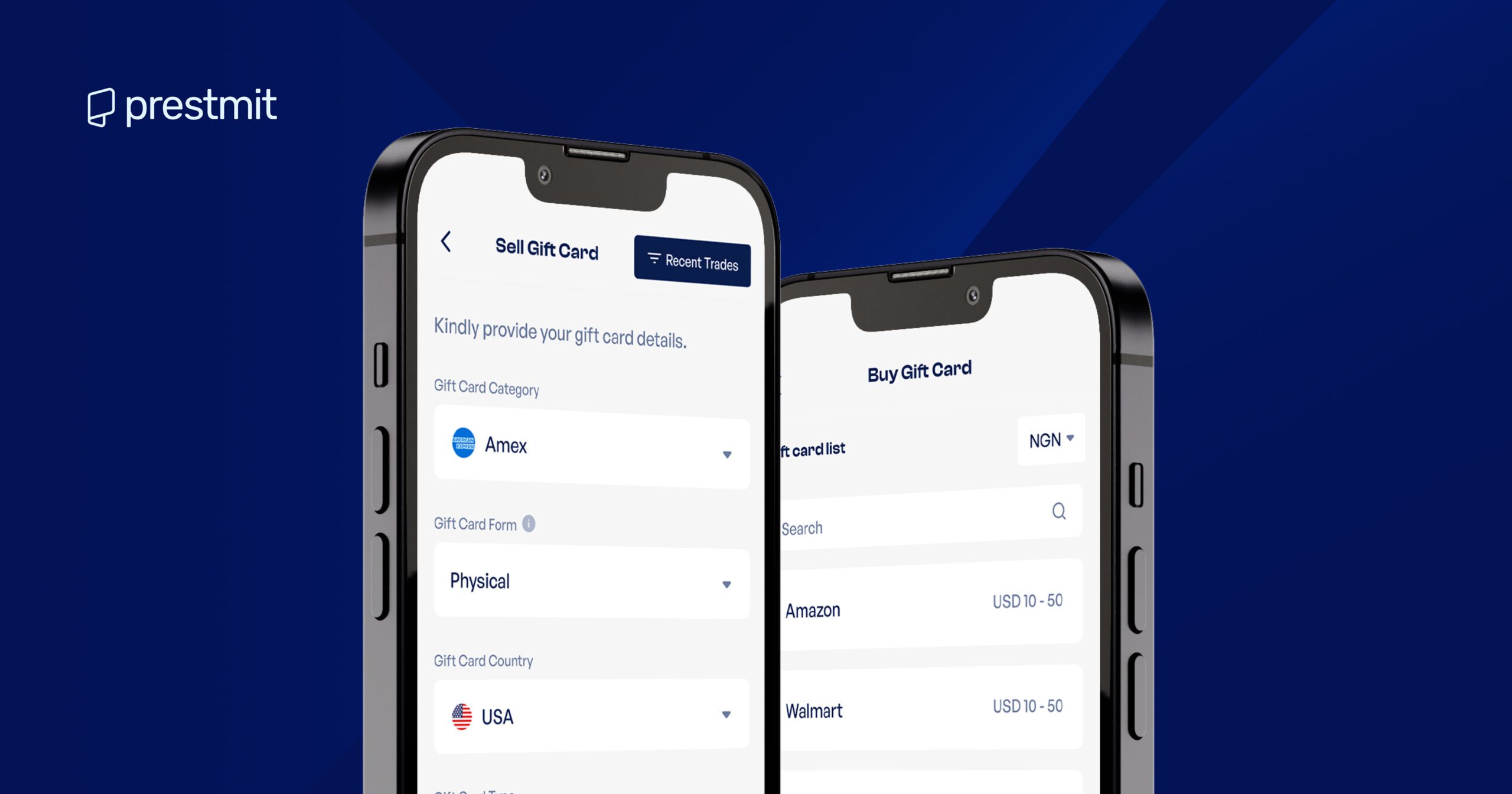
Prestmit is a leading virtual asset marketplace where you sell gift cards for cash. Not every platform that says it pays cash actually delivers; Prestmit does, backed by a handful of features built specifically to protect your transactions.
Take the rate calculator first: it shows your exact payout before you commit, so the number you see is the number you get – no downgrading the offer after your gift card is already gone. That transparency runs through the entire transaction. Once your gift card clears verification, Prestmit doesn’t make you wait days for a “review” – most transactions settle within 5-10 minutes, and with auto-withdrawal turned on, your payout routes straight to your bank account or crypto wallet without you lifting a finger.
None of these features would matter, though, if your account and transactions aren’t secure. SSL encryption, two-factor authentication, and biometric login guard every transaction, and 24/7 support means a real person is available if anything goes wrong.
And Prestmit doesn’t box you into one brand or one payout method. It supports 140+ gift card brands – Amazon, Apple, Steam, Google Play, and beyond – with payouts available in Naira, Cedis, USD, or crypto, so wherever you are and whatever gift card you’re holding, there’s a good rate for it.
How to Sell Gift Cards on Prestmit (Step-by-Step)
To sell gift cards on Prestmit, follow these simple steps:
Step 1: Create an account
Visit the Prestmit website or download the Prestmit app from the Google Play Store or App Store.
Sign up and complete the account setup process.
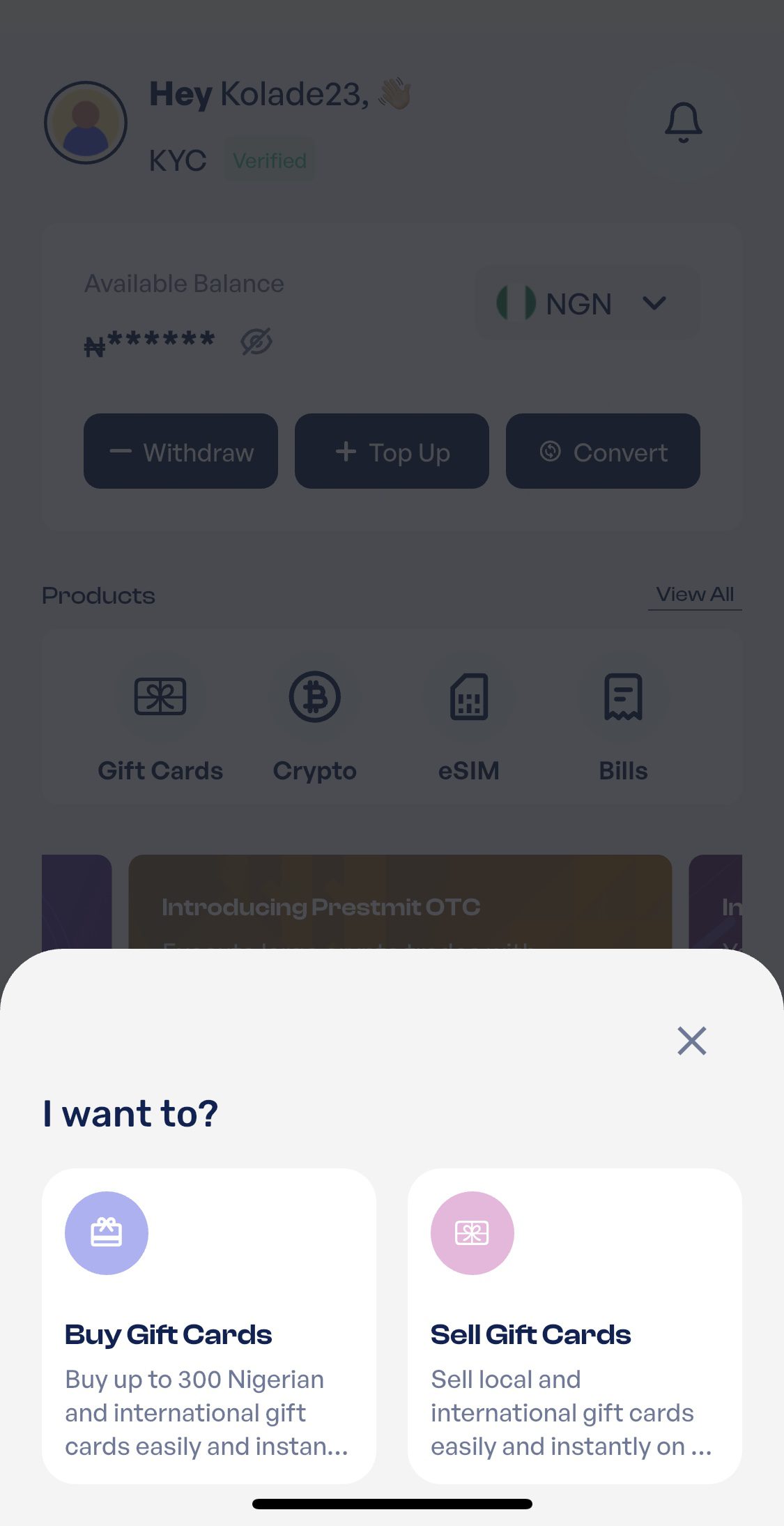
Step 2: Go to the Gift Card section
Screenshot
Log in to your account and click on the Gift Card section on your dashboard, then select the option to sell gift cards.
Click on the option to Sell Gift Card
Step 3: Choose Payout Method
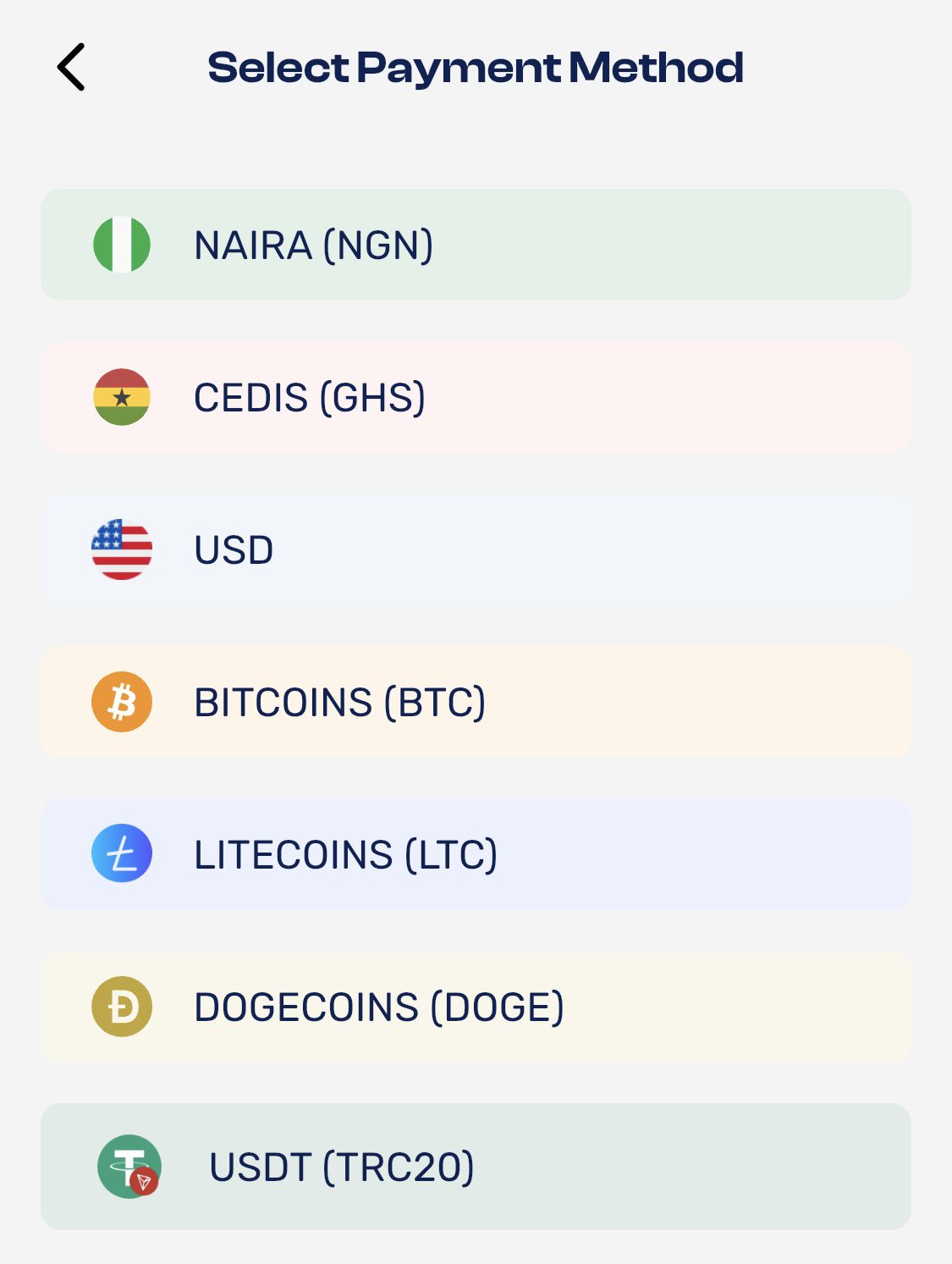
Choose your preferred payout currency. Prestmit supports payments in Naira (NGN), Cedis (GHS), USD, and cryptocurrency.
Step 4: Choose the Gift Card Category
Choose the gift card you intend to sell from the gift card category, then select the card type.
Provide the required details about your card, including the card value and type, as prompted
Check today’s value with Prestmit’s in-app gift card rate calculator before you confirm, so you know exactly what you will receive.
Step 5: Submit your card details
Enter the necessary card information and upload any required images or codes, depending on whether you have a physical card or an eCode, then submit.
Step 6: Complete your transaction
Review your submission and proceed with the transaction. Once your gift card is verified, your payment will be processed.
Frequently Asked Questions
1. Which Gift Card Brands Have the Most Stable Rates?
Apple/iTunes, Amazon, and Steam tend to hold the most stable rates because buyer demand for them is constant and deep. Niche or regional brands swing more because a small change in supply or demand moves their thinner markets. The current leaders are tracked in our roundup of the highest gift card rates in Nigeria.
2. Does the Dollar-to-Naira Exchange Rate Directly Affect Gift Card Prices?
Yes, it’s the strongest single influence. A weaker naira generally lifts the Naira value of dollar-denominated cards, while a stronger naira eases it. The link isn’t perfectly instant, because platforms also factor in their own card supply and risk costs, but the exchange rate sets the overall direction.
3. Why Do Two People Selling the Same Gift Card Get Different Rates?
Because the cards usually aren’t identical in the ways that matter: card type (physical vs e-code), country of issue, denomination, and the exact time of sale all affect the rate. A $100 US physical Apple card sold on Monday and a $100 UK Apple e-code sold on Friday are four pricing variables apart.
4. What Time of Day or Week Has the Best Gift Card Rates?
There’s no fixed golden hour – rates respond to market conditions, not the clock. The practical pattern: avoid selling right after major foreign holidays when supply floods in, and watch for periods when the naira is weakening, which tends to lift rates. Checking the live rate before every sale beats any timing rule.
5. How Can I Check the Current Rate Before Selling My Gift Card?
Use Prestmit’s in-app rate calculator or the rates page on the website. Select your card brand, country, and value, and the current rate plus your exact Naira payout is displayed instantly – before you upload anything or commit to the sale.
Conclusion
Gift card rates change daily in Nigeria because they’re priced by live market forces: the dollar-to-naira exchange rate, supply and demand per brand, card type and region, fraud risk, seasonal cycles, and global policy shifts. The swings aren’t arbitrary – they’re the market repricing risk and value in real time.
The winning habit is simple: check the live rate every time, never rely on yesterday’s number, and sell high-demand brands when supply is thin. Sell gift cards at the best market rates on Prestmit, where the rate and your exact payout are displayed upfront and payment lands in your wallet minutes after verification.
Last updated on September 29, 2026