Table of Contents
Security has become one of the biggest concerns for users as cryptocurrency adoption continues to grow. Many people lose funds not because they made bad investment decisions, but because they stored their crypto in unsafe places. Online wallets, exchanges, and mobile apps are convenient, but they are also connected to the internet, which exposes them to hacking risks.
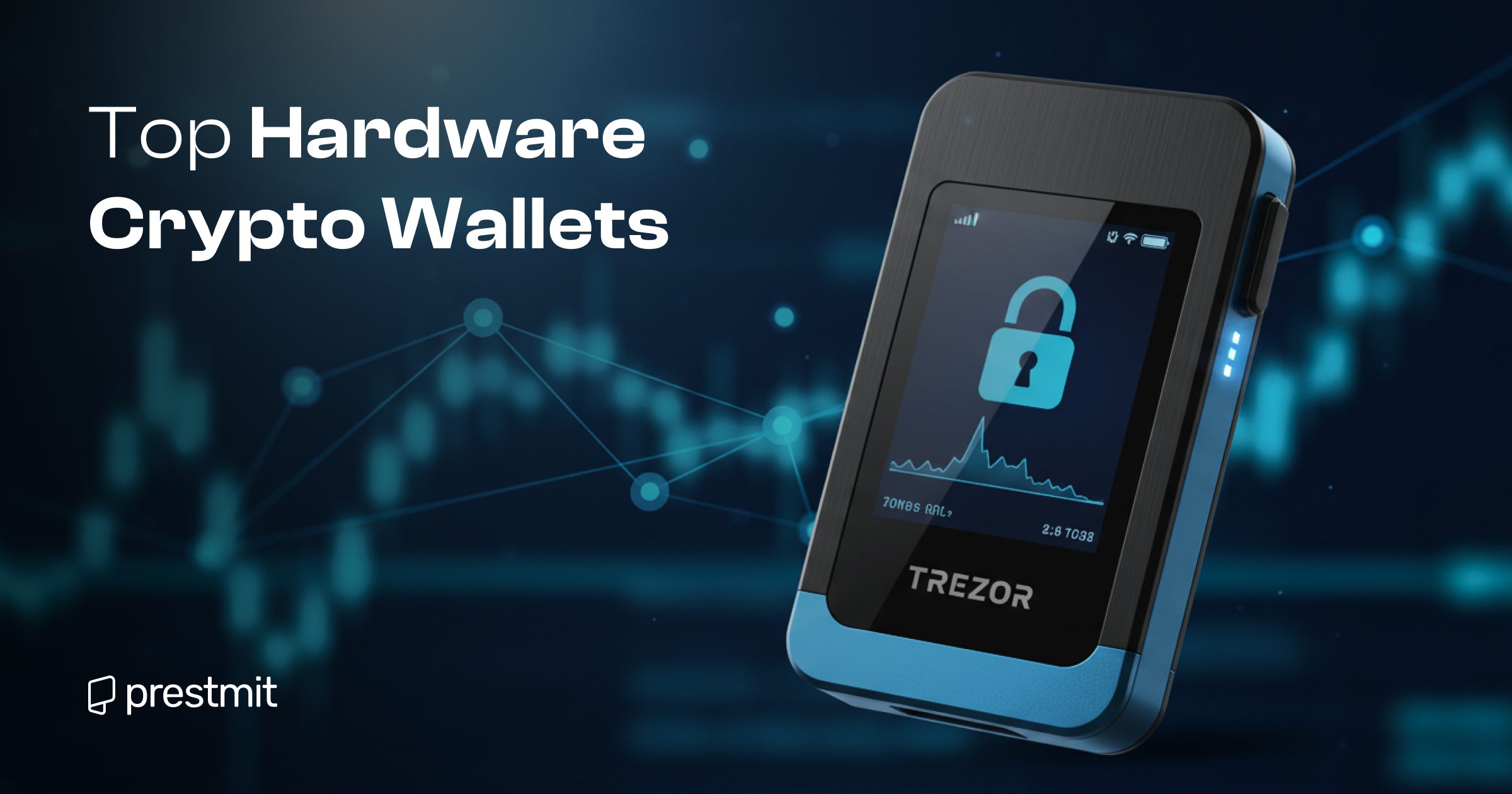
This is where hardware offline wallets, also known as cold wallets, come in. These devices store your private keys offline, keeping them away from online threats. For anyone serious about protecting their crypto, a hardware wallet is no longer optional, it’s a basic security step.
This article explains what hardware wallets are, why they matter, the top five options available today, how to set them up, and answers common questions beginners often ask.
Why Do Hardware Wallets Matter?

Hardware wallets matter because they protect the most important part of your crypto ownership: your private keys. A private key gives full control over your funds. If someone gets access to it, they can move your crypto without permission. Unlike online wallets, hardware wallets keep private keys offline at all times. Even when you connect the device to a phone or computer, the private key never leaves the wallet. Transactions are signed inside the device and then sent to the blockchain.
This offline design protects users from malware, phishing attacks, fake apps, and exchange hacks. Hardware wallets are considered the safest way to store crypto for long-term use. Hardware wallets also give users full control. No company holds your funds. No platform can freeze your account. As long as you keep your recovery phrase safe, you remain in control.
Best Crypto Offline Wallets: Top Bitcoin Hardware Wallet Picks
1. The Ledger Nano X
The Ledger Nano X is the company’s second-generation hardware wallet. For a reason, the greatest crypto hardware wallet is a physical wallet. Because mobile users can utilize their wallets on their phones, you can manage, exchange, and buy crypto while on the go. As a result, even if you don’t have access to a computer, you can still trade efficiently using your Android or iOS mobile.
It comes with Ledger Live software, which allows you to check your balance as well as send and receive currencies. With over 1,800 digital coins and tokens supported by Ledger, you’re not confined to Bitcoin. Coin staking is also supported by Ledger Live, allowing you to earn rewards based on your balance.
This crypto cold wallet’s dimensions are 72mm x 18.6mm x 11.75mm, and it weighs roughly 34 g. The Ledger Nano X is made of brushed stainless steel and includes a lithium-ion 100mAh battery. One hardware wallet, one USB-C to USB-A cable, one getting started leaflet, three recovery sheets, and one keychain strap is included in the box. This crypto wallet gives you access to all smart services, such as DeFi apps and NFTs.
Pros
- It can handle a large number of digital assets.
- Ledger Live is available to you.
- Between 3 and 20 separate programs can be stored.
- Provides secure storage at a minimal cost.
- It accepts over 5,500 different cryptocurrencies.
- The device is compatible with both mobile and desktop computers.
Cons
- This crypto wallet has a maximum storage capacity of three apps.
2. Trezor Model T
Trezor Model T is a cryptocurrency hardware wallet that gives customers rapid access to third-party exchanges like Changelly and CoinSwitch via the Trezor web interface.
This encrypted hardware wallet has a touch screen interface that is easier to use for new cryptocurrency users than its predecessor. This best cold wallet’s dimensions are 64 mm x 39 mm x 10 mm, and its weight is roughly 22 g.
One Trezor Model T hardware wallet, one USB-C to USB-C cable, two Recovery seed cards, a Model T magnetic dock, and one keychain strap are included in the kit.
It’s one of the finest cold storage wallets since it comes with a USB-C to USB-A adapter that allows you to connect to a desktop computer or, if you prefer, a smartphone through Bluetooth.
Pros:
- There is no limit to how much money you may store in your wallet.
- Keep your passwords in a secure location.
- More than 1,800 currencies are supported.
- Authentication that is segregated from the rest of the network.
- Offline storage that is extremely secure
Cons:
- It’s difficult to type on a little touchscreen
- Crypto Cold Wallet is not very secure
3. Ledger Nano S (Secure Ledger)
The Ledger Nano S is one of Ledger’s most popular cold wallets. It’s one of the first hardware wallets to support over 1800 different cryptocurrencies. The Nano S has sufficient storage to create wallets for a limited amount of cryptocurrencies at once.
The Ledger Nano S measures 104mm x 58mm x 5mm in size and weighs 16.2g. It is constructed of brushed stainless steel and plastic. It comes with a powerful 100mAh battery. 1 hardware wallet, 1 USB cable, 1 getting started pamphlet, 3 recovery sheets, and 1 keychain strap are included in the box. Micro-B is the USB cable type.
Pros:
- Ledger Live software provides ultimate protection and management over your cryptocurrency.
- Simple to use Hardware Drive in the USB Style
- Simple but effective
- Allows you to create a 20-character recovery password.
Cons:
- For new users, the operation is difficult and complex.
- Only 18 applications will be accepted.
4. CoolWallet Pro:
CoolWallet Pro is a DeFi-focused mobile hardware wallet that allows you to connect to a device over an encrypted Bluetooth connection within a 10-meter radius without requiring an internet connection. It makes it simple to communicate with DeFi, Dapps, and NFT. Its body is tamper-proof and entirely water-resistant, and its lithium-ion battery lasts for several weeks on a single charge.
With its EAL6+ secure element (SE), AES256 encrypted Bluetooth Low Energy (BLE), and five processors to handle its Power Management, this one of the best hardware wallets delivers multi-layer cold storage security.
Pros
- It supports both Android and iOS smartphones and provides encrypted Bluetooth communications.
- Secure Element that is EAL 6+ certified.
- Your cold storage wallet allows you to track, view, and exchange cryptocurrency.
- It allows you to earn incentives by staking crypto using the wallet.
- Bluetooth link that is encrypted
- Connecting and integrating a mobile device is simple.
Cons
- There isn’t much to choose from when it comes to staking bitcoin.
5. S1 Safepal
In 2019, the SafePal S1 Hardware Wallet was released after three years of development. It works with 19 different blockchains and over 10,000 different crypto tokens, including non-fungible tokens (NFTs). SafePal is one of the top cold storage wallets, intending to provide crypto users with a secure, straightforward, and simple-to-use crypto management solution.
You may also combine numerous operational and security aspects, such as recovery seed, two-factor authentication (2FA), and a pin code, making it a more secure solution than other hardware wallets.
It’s a fashionable wallet with a crisp display but a shaky keyboard. SafePal is fully functional at temperatures ranging from -4° to 158° F. SafePal S1, USB-A to Micro-USB cable, three recovery sheets, a cleaning cloth, and one quick start instruction are all included in the box.
This cold crypto wallet may be charged using a USB connection. It has a 400mAh battery and no connectivity options.
Pros
- Independent secure element EAL 5+
- The price is reasonable.
- Multiple layers of security sensors are available.
- Work on a self-destruct device is ongoing.
- Community help is available 24 hours a day, 7 days
Cons
- This is not an easily transportable device.
- There are a limited number of coins that are supported.
How to Set Up Hardware Wallets
Here are the steps to setting up a hardware wallet:
- Buy the device only from the official manufacturer or authorized sellers. This reduces the risk of tampering.
- Turn on the device and follow the setup instructions on the screen. You will be asked to create a PIN to protect the wallet.
- The wallet will then generate a recovery phrase, usually 12 or 24 words. This phrase is the most important part of the setup. Write it down on paper and store it safely offline. Never take photos or store them online.
- After setup, install the official wallet software on your phone or computer. Use this software to receive and send crypto. Always confirm transactions directly on the hardware device before approving them.
Frequently Asked Questions on Top 5 Crypto Harware Wallets
1. Are hardware wallets completely safe?
Hardware wallets are the safest option available, but no system is perfect. They protect against online threats, but users must still protect their recovery phrases and avoid fake apps or phishing scams.
2. Can a hardware wallet be hacked?
Direct online hacking is extremely difficult because the device stays offline. However, physical access or user mistakes can still lead to loss. This is why secure storage and careful use matter.
3. What happens if I lose my hardware wallet?
If you lose the device, you can recover your crypto using your recovery phrase on a new compatible wallet. Without the recovery phrase, funds cannot be recovered.
4. Do I need a hardware wallet if I trade often?
Traders often keep small amounts on exchanges for convenience. Long-term holdings are best stored in a hardware wallet for safety.
5. Are hardware wallets beginner-friendly?
Yes. Most modern hardware wallets are designed for beginners and include step-by-step guides during setup.
Conclusion
Hardware offline wallets play a critical role in protecting cryptocurrency. They remove private keys from the internet and give users full control over their funds. As crypto adoption increases, security becomes more important than convenience. Devices like Ledger, Trezor, SafePal, and Keystone offer reliable solutions for different types of users. Whether you are a beginner or a long-term holder, using a hardware wallet is one of the smartest decisions you can make in crypto. Taking control of your security today can prevent irreversible losses.
Last updated on January 16, 2026